Who Really Cares About Palestinian Children?
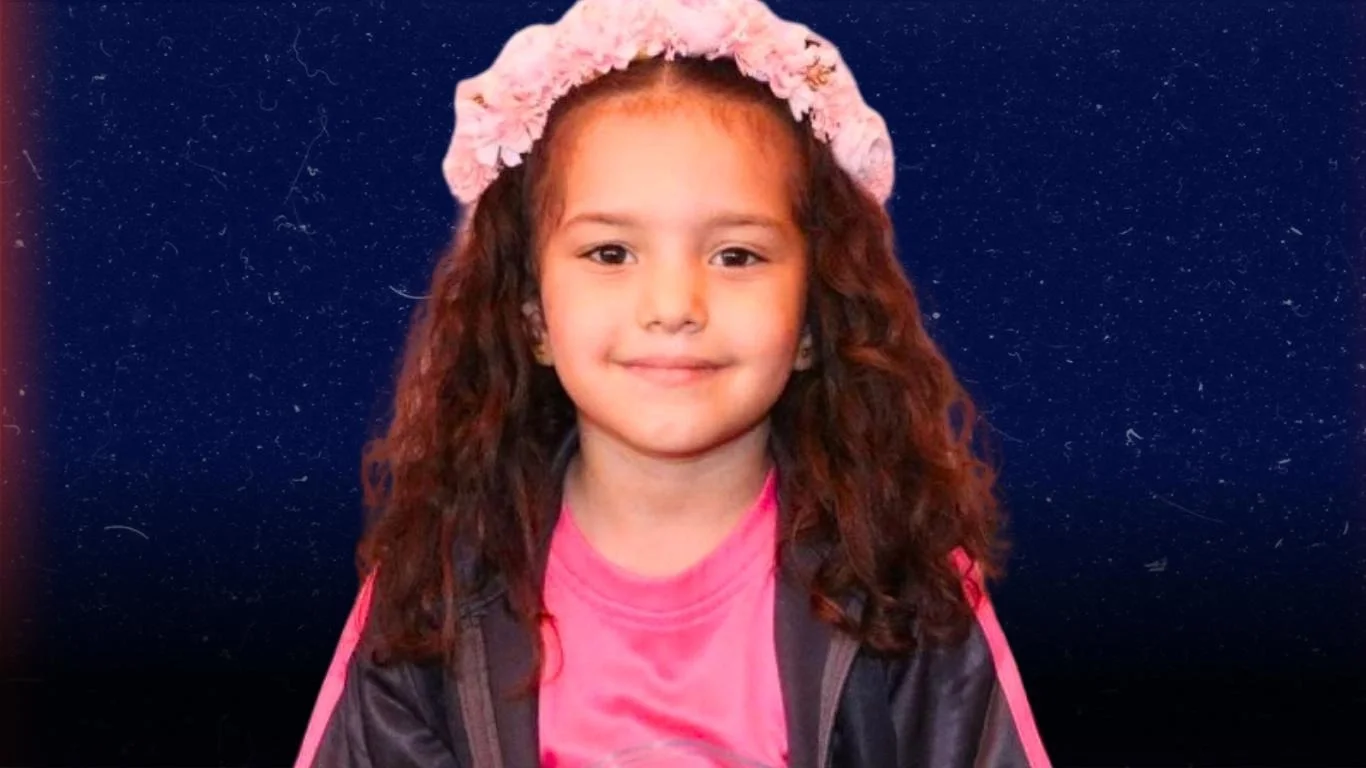
More than ninety days into this catastrophe, we have all seen video after video of countless horrors and unimaginable pain. I’ve seen a Gazan child clutching tightly to a clump of hair — because that’s all they have left of their loved one. I’ve seen children crying and digging through dirt, screaming out for their parents. I’ve seen children in states of shock, shivering uncontrollably. I’ve seen children hugging each other — one still buried in the rubble, the other’s body barely visible above ground. We’ve seen videos of premature babies being left behind as hospital staff are forced to evacuate under threat to their lives. I’ve seen a child screaming from the burning sensation of rocks falling on her back — she cries out, “All I wanted to do was go to school.” Another child cries, “I wish this was all a dream!” And another says, “I just want to say the word ‘Mother’ again. Who will I say that to?”
More children have been killed in this conflict than in over 20 countries engaged in armed conflict over the last three years. A horrifying acronym has been coined for this war: WCNSF — “Wounded Child, No Surviving Family.”
Charges of genocide have been brought forth. Secretary Blinken has been traveling the world, desperately lobbying other countries not to back these charges. Locally, most Muslims are preparing for a massive protest in Washington, D.C., while others remain behind to leverage the first Muslim Heritage Month as a political tool. Meanwhile, the news media continues to whitewash headlines, obscuring the massive death toll Palestinians continue to endure.
According to The Intercept, “For every two Palestinian deaths, Palestinians are mentioned once. For every Israeli death, Israelis are mentioned eight times — a rate 16 times higher per death than that of Palestinians.” The report also found that only two out of more than 1,100 news articles in the study mentioned the word “children” in relation to Gazan children. (Source: The Intercept, January 9, 2024)
Suddenly, all the smooth talkers, the politicians, and the people who cry about “human rights violations” have gone silent. The media is silent. Our leaders, both foreign and domestic, are silent.
Does anyone care about the children of Gaza?
Yes.
Allah (SWT) cares deeply and intimately about children. This has been revealed to us in several places in the Quran.
As thousands of Zionists salivate over the possibility of ethnically cleansing Gaza and stealing its land, Allah (SWT) says in Surah An-Nisa (4:10):
“Indeed, those who unjustly consume the property of orphans only consume into their bellies fire. And they will burn in a blazing Flame.”
As thousands of children have been buried beneath the rubble, with many more still waiting to be found, Allah (SWT) says in Surah At-Takwir (81:8–9):
“And when the baby girls, buried alive, are asked: for what crime were they put to death?”
They will surely be brought to justice.
Despite these reassurances from Allah (SWT), many of us still find ourselves asking: why so much bloodshed? What is the purpose? Even the angels had the same question.
In Surah Al-Baqarah (2:30): “When your Lord told the angels, ‘I am putting a successor on earth,’ they said, ‘How can You put someone there who will cause damage and bloodshed, when we celebrate Your praise and proclaim Your holiness?’ But He said, ‘I know things you do not.’”
Allah (SWT) knows that which we do not know. That is one of the beauties of the Quran — each reading, at every stage of life and in every situation, unearths new wisdoms and gems.
On the subject of not knowing and not understanding, the best story to reflect on is the story of Musa (A) and Khidr (A), found in Surah Al-Kahf (18:65–82).
Musa (A) meets Khidr (A), whom Allah (SWT) describes as “a man whom We had granted Our mercy and whom We had given knowledge of Our own.” Musa (A) wishes to learn from this knowledge. Khidr (A) cautions him: “You will not be able to bear with me patiently. How could you be patient in matters beyond your knowledge?”
Musa (A) responds: “God willing, you will find me patient. I will not disobey you in any way.” Khidr (A) then says: “If you follow me, do not question anything I do before I mention it to you myself.”
Allah (SWT) then shares with us three separate incidents in which Musa (A) cannot understand what is unfolding before him.
In the first incident, Musa (A) and Khidr (A) board a boat, and Khidr deliberately makes a hole in it. Musa (A) is alarmed: “How could you make a hole in it? Do you want to drown its passengers? What a strange thing to do!” Khidr replies: “Did I not tell you that you would never be able to bear with me patiently?” Musa (A) asks forgiveness and pledges not to question him again.
They travel on. They encounter a young boy, and Khidr (A) kills him. Musa (A) cries out: “How could you kill an innocent person? He has not killed anyone! What a terrible thing to do!” Khidr (A) again reminds him of his promise. Musa (A) concedes: “From now on, if I question anything you do, banish me from your company — you have put up with enough from me.”
They travel further. When they reach a town and ask for food but are refused hospitality, they come across a wall on the verge of collapse. Khidr (A) repairs it without payment. Musa (A) observes: “If you had wished, you could have taken payment for that.”
At this, Khidr (A) says: “This is where you and I part company. I will now explain the meaning behind the things you could not bear with patience.”
The boat belonged to needy people who made their living from the sea. He damaged it because a king was coming who was seizing every serviceable boat by force. The young boy had parents who were people of faith; fearing he would bring them grief through wickedness and disbelief, Allah (SWT) willed that their Lord give them another child — purer and more compassionate — in his place. And the wall belonged to two young orphans in the town, beneath which lay buried treasure. Their father had been a righteous man, and so their Lord intended for them to reach maturity and then recover their treasure as a mercy.
It is striking that two of the three incidents involve children, and one involves the destruction of property. It is precisely when children are harmed that it is hardest to comprehend Allah (SWT)’s decree. Viewed through the lens of what is happening in Gaza: the damaged boat ultimately preserved the needy people’s means of livelihood. The destruction unfolding before us in Gaza may similarly prevent a far greater destruction down the line — one that we cannot yet see.
Allah (SWT) is granting martyrdom to these children and admitting them into Jannatul Firdous — bringing them close to Himself, in the company of the blessed angels and prophets. Khidr (A) explained that had the boy grown up, he would have fallen into wickedness and disbelief. It was better for his soul to be taken immediately. We do not know what horrors these children might have faced in the future, or whether they could have endured such tests. In His infinite wisdom, Allah (SWT) made them martyrs.
In the last incident, Khidr (A) explains the wall and why he repaired it — to prevent the buried wealth of orphans from being discovered and taken. He tells Musa (A): “Their father had been a righteous man.” SubhanAllah. Even after the father had passed away, Allah (SWT) was looking out for his children, long after his death, because of his righteousness. Allah (SWT) was using Khidr (A) as an instrument of His divine purpose.
I have no doubt that Allah (SWT) cares about the more than 30,000 souls who have been martyred in Gaza. As confirmed by the Prophet (S), the people of Gaza are among the best of peoples. Allah (SWT) will look after those who have died as martyrs, and He will look after those who are left behind — just as He looked after the orphans whose righteous father had passed away.
Like Musa (A), we may not understand the reality unfolding before us — but Allah (SWT) has a plan. May Allah (SWT) use us for His plan, and grant us His wisdom, knowledge, and mercy, just as He granted Khidr (A). May He make us instruments of His divine will, and give us guidance, hope, and mercy in every step. May He have mercy on the people of Palestine, the people of Gaza, and all the Muslims who suffer around the world. Ameen.